Structural support
Een parametrisch golfdak optimaliseert daglicht en ventilatie. Geïntegreerde zonnepanelen in de modules maken het gebouw over 100 jaar CO2-negatief.
Afstudeerproject MSc Architecture, TU Delft
Een hybride publiek gebouw voor Ter Apel dat opvang, dorp en landschap opnieuw met elkaar verbindt.
Project tools
Deze websites zijn tijdens het project ontwikkeld om participatie, configuratie en beheer niet alleen te beschrijven, maar ook interactief te verkennen.
Visualisatietool voor de AZC-workshop. Deze publieke demo gebruikt synthetische mockupdata; echte workshopdata wordt niet gebruikt vanwege TU Delft dataregels.
Open tool 02Bookingplatform waarmee gebruikers modules kunnen reserveren en beschikbaarheid via een AI-ondersteunde interface kunnen verkennen.
Open tool 033D-configurator waarmee modules, functies en fasering van het Open Building-systeem ruimtelijk getest kunnen worden.
Open toolThe Spatial Mediator onderzoekt hoe architectuur de gespannen relatie tussen het asielzoekerscentrum, het dorp Ter Apel en het omliggende landschap kan verzachten. Het project koppelt publieke voorzieningen aan een open bouwsysteem dat kan reageren op politieke, sociale en economische verandering.
Project logic in three steps
Use the tabs as a short table of contents: first the site, then participatory data, then the changeable building frame.
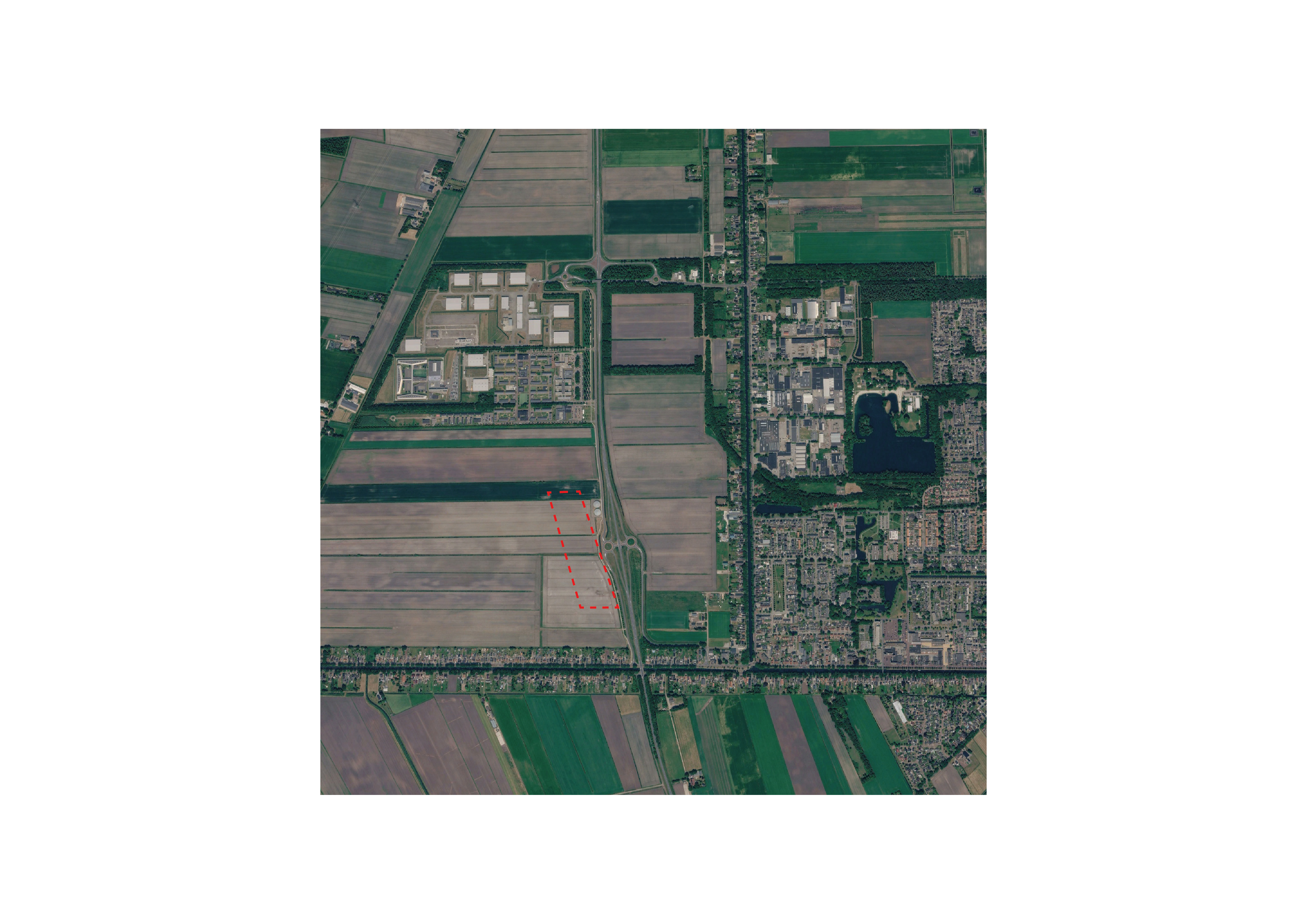
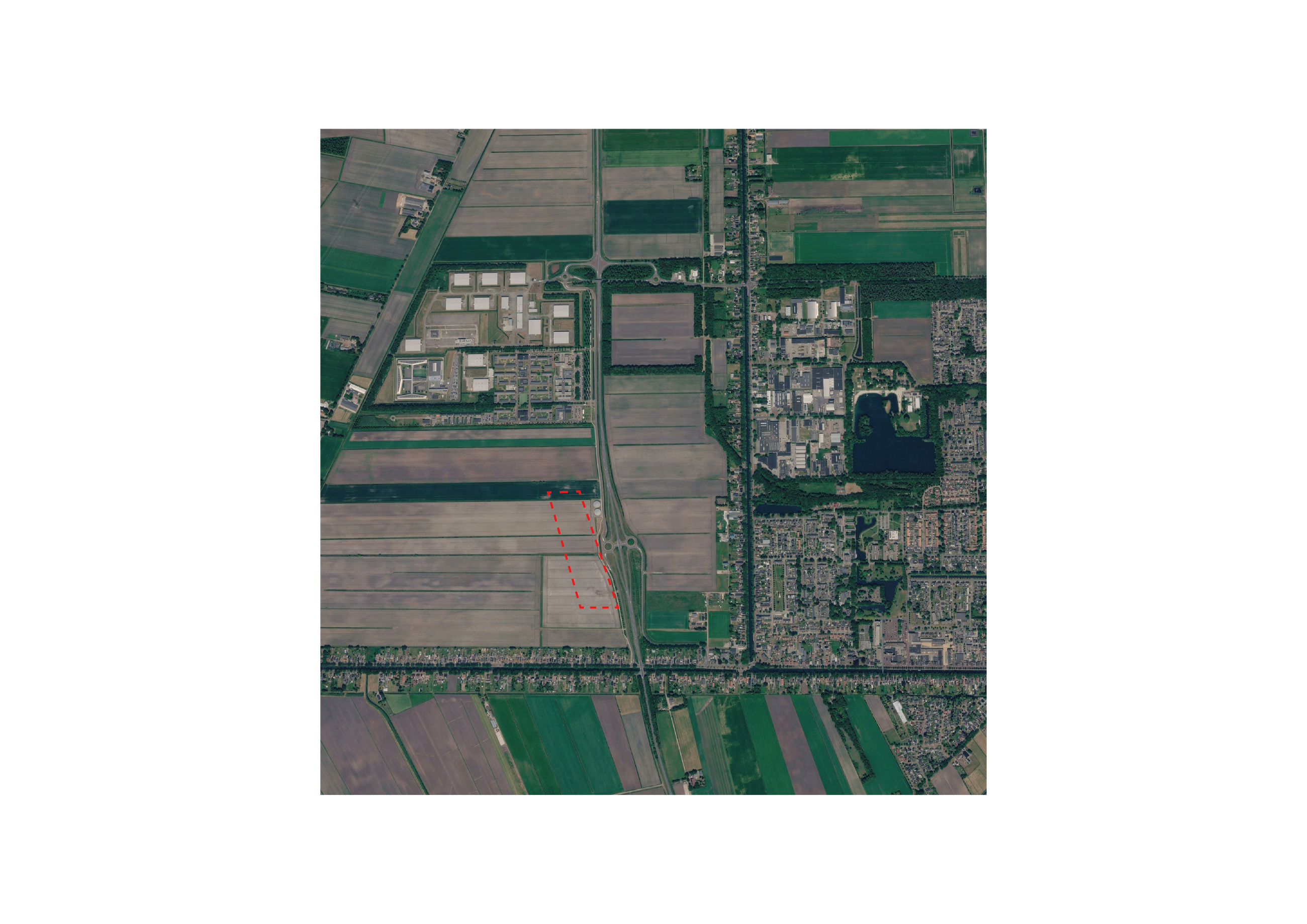
Context research
This chapter brings together the village edge, COA route, Nij Begun, Cittaslow tourism and future station node as the spatial pressure around the site.
Participatory workshop
The workshop images show how multilingual booklets and block choices turned abstract wishes into comparable input, without publishing real AZC data.
Research diagrams
This sequence keeps the analytical plates readable as separate steps: location, users, workshop data and system rules without retelling the full report.
Het fundament
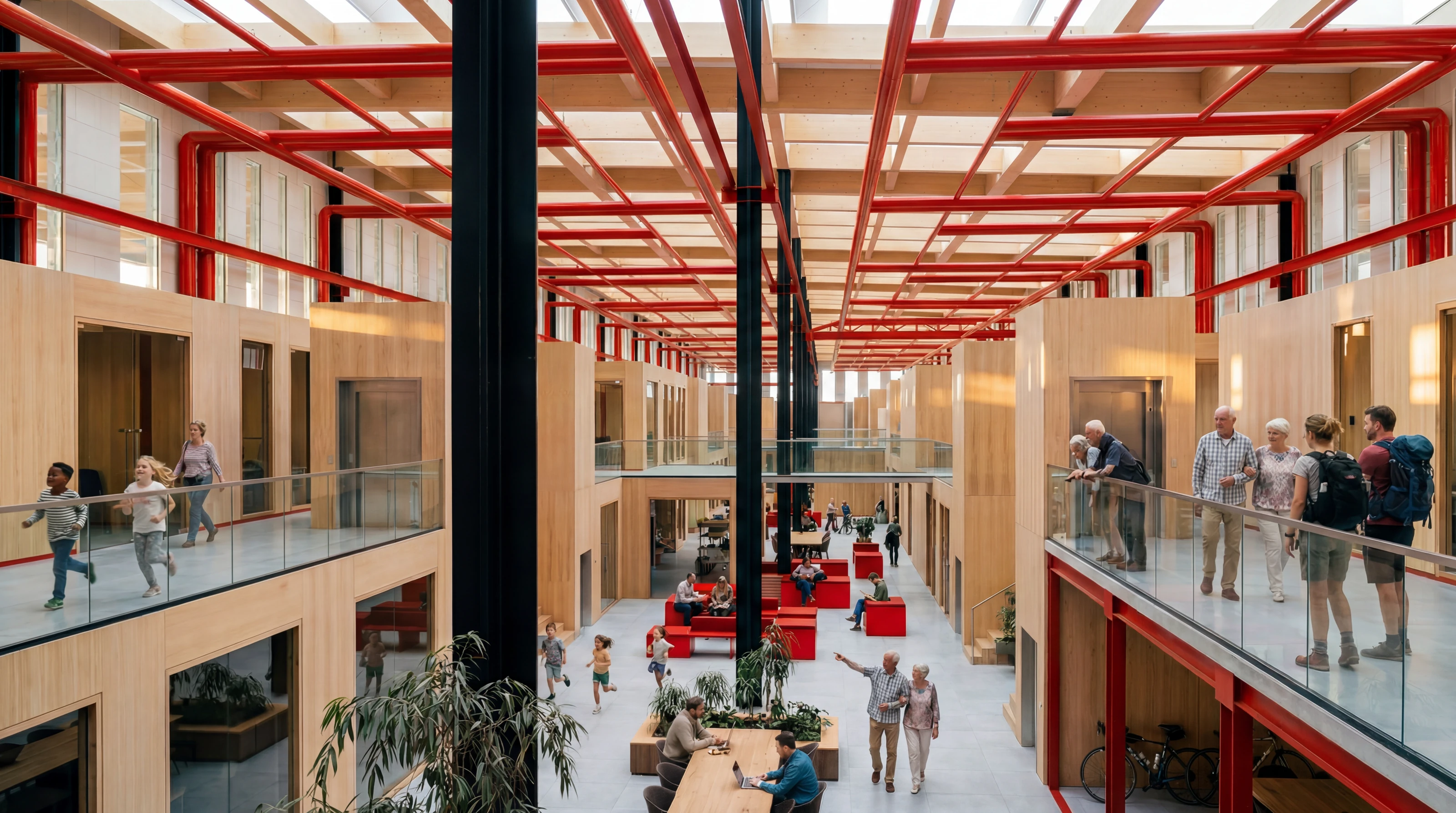
Een permanente staalconstructie op een stramien van 14,4 meter vormt de basis. Daarbinnen kunnen modulaire inbouweenheden vrij geplaatst, verplaatst en verwijderd worden.
Met een industriële bovenloopkraan kan het gebouw transformeren zonder structurele sloop. Zo kan één gebouw reageren op opeenvolgende behoeften: van opvang en ontmoeting tot toerismeterminal en wonen.
Form and site strategy
The form studies and axonometrics sit between research and construction: they show how the site analysis becomes a multi-entrance mediator instead of a single-object building.
Lange termijn
Technical strategy
Een parametrisch golfdak optimaliseert daglicht en ventilatie. Geïntegreerde zonnepanelen in de modules maken het gebouw over 100 jaar CO2-negatief.
Bewoners, toeristen, gemeentelijke diensten en asielzoekers delen een centrale publieke ruimte waar gecontroleerde ontmoeting mogelijk wordt.
Het programma is gebaseerd op een workshop met 24 bewoners van het asielzoekerscentrum in Ter Apel en vertaalt hun input naar concrete ruimtelijke keuzes.
Support, infill and technical system
This chapter moves from principle to execution: columns, fragments, facade panels and wall elements as buildable parts.

Projectdata
Key section
This render is pulled out full width because it shows how the mediator works as a shared route between programmes.
Plans, sections and circulation
Plans, sections, site plans, green areas, accessibility and circulation are placed here because the presentation moves from system logic into final outcome drawings.
Renders and phasing
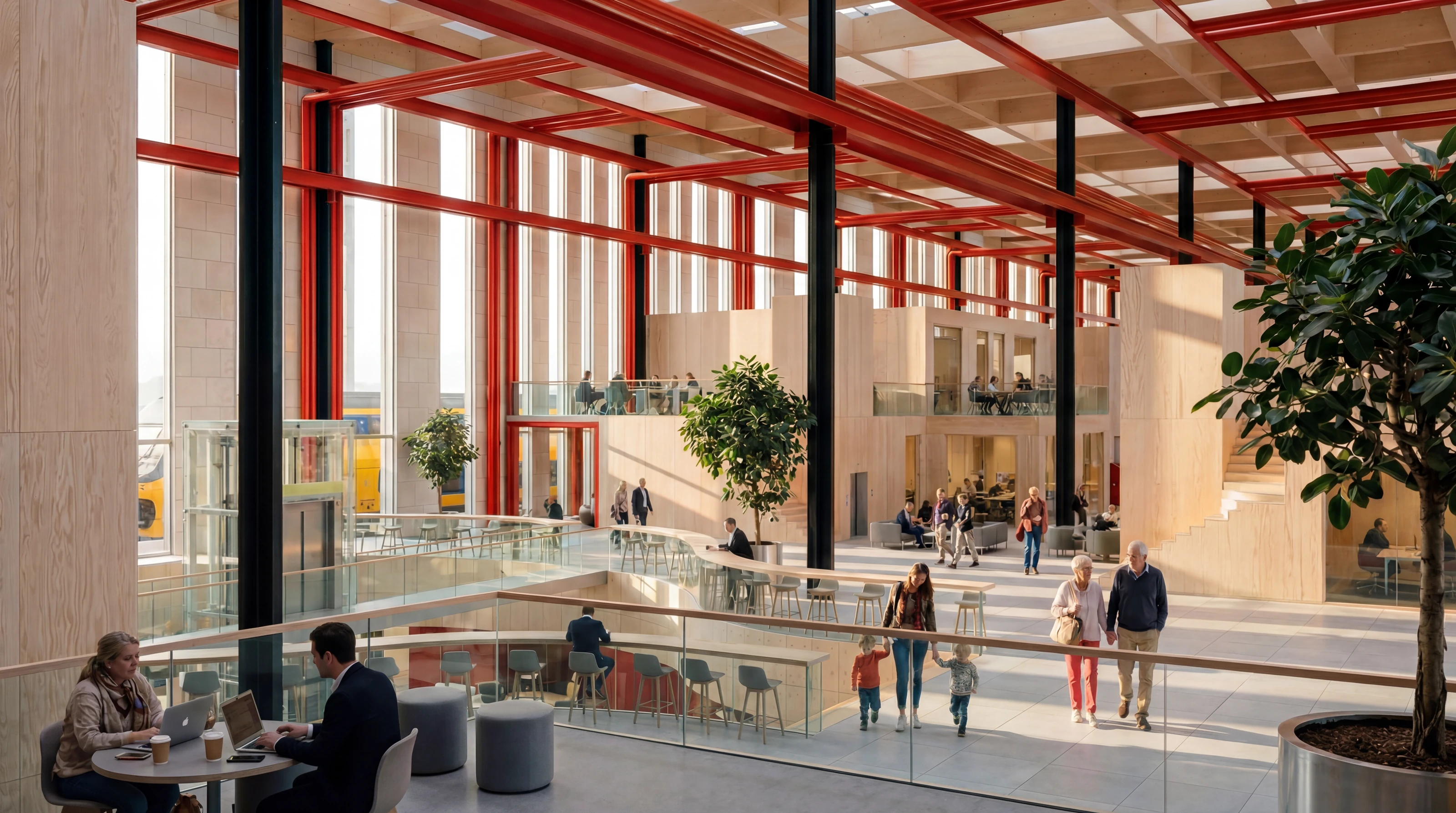
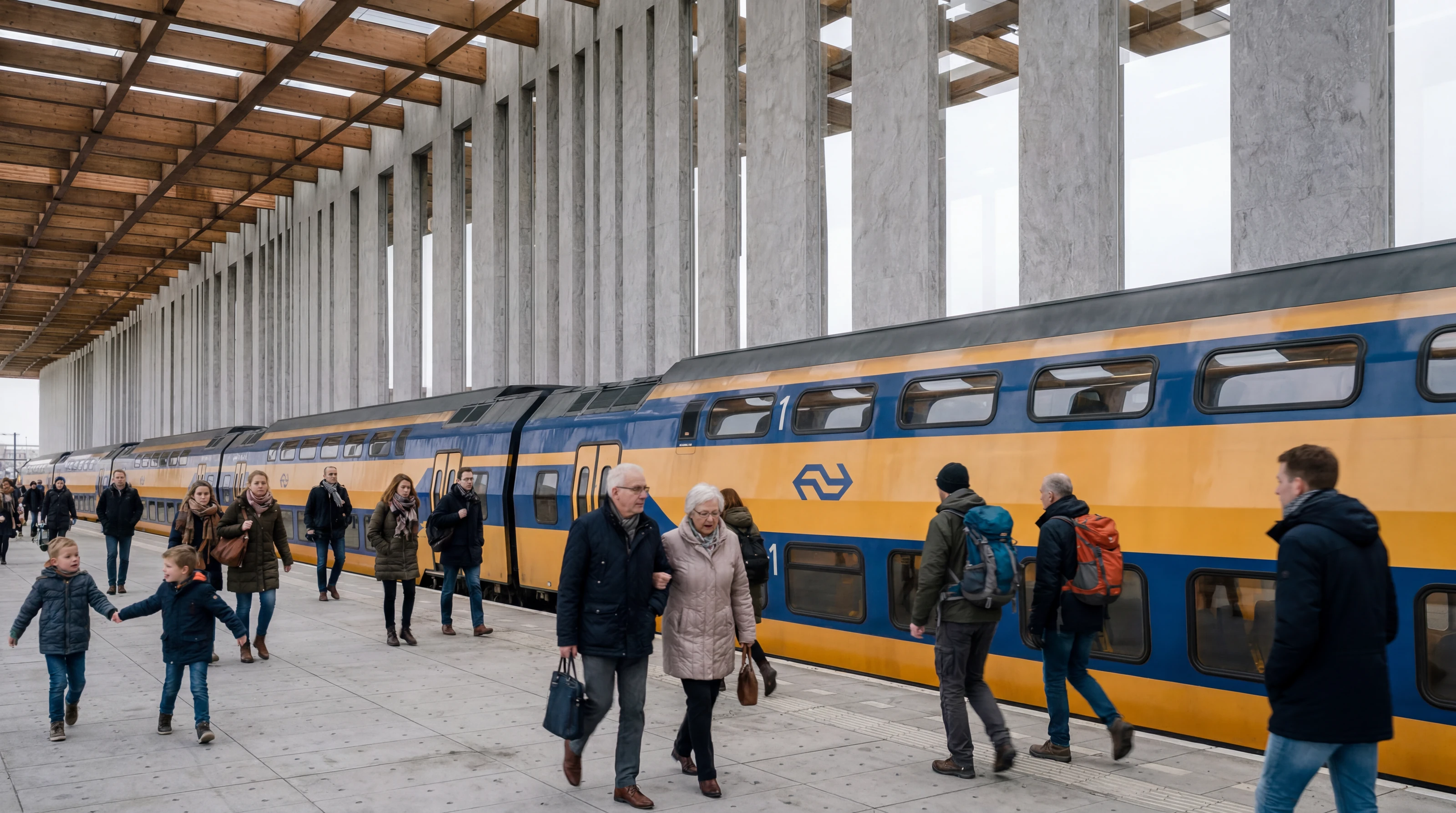
The renders move from technical explanation to experience: arrival, interior, public route and the atmosphere of successive phases.
Gefaseerde transformatie
De architectuur is ontworpen als een reeks uitvoerbare stappen, niet als een star eindbeeld.
AZC-functies en een evenementenhal creëren directe lokale binding.
Gemeenschapsvoorzieningen worden uitgebreid en sterker verbonden met het dorp.
De komst van de Nedersaksenlijn maakt een volledige mix van functies mogelijk.
De focus verschuift naar Westerwolde, landschapstoerisme en regionale verbindingen.
De laatste fase demonstreert de maximale aanpasbaarheid van het Open Building-principe.
Dossier
MSc Architecture, TU Delft, 2026
Studentnummer 6103421
Dit project is onderdeel van de afstudeerstudio AR4AP120. Het onderzoekt hoe architectuur kan bijdragen aan het herstellen van de identiteit van een dorp in crisis, met flexibiliteit, participatie en langetermijndenken als ontwerpvoorwaarden.